March 16, 2026
Building a WireGuard Relay Chain:
Romania to New Zealand
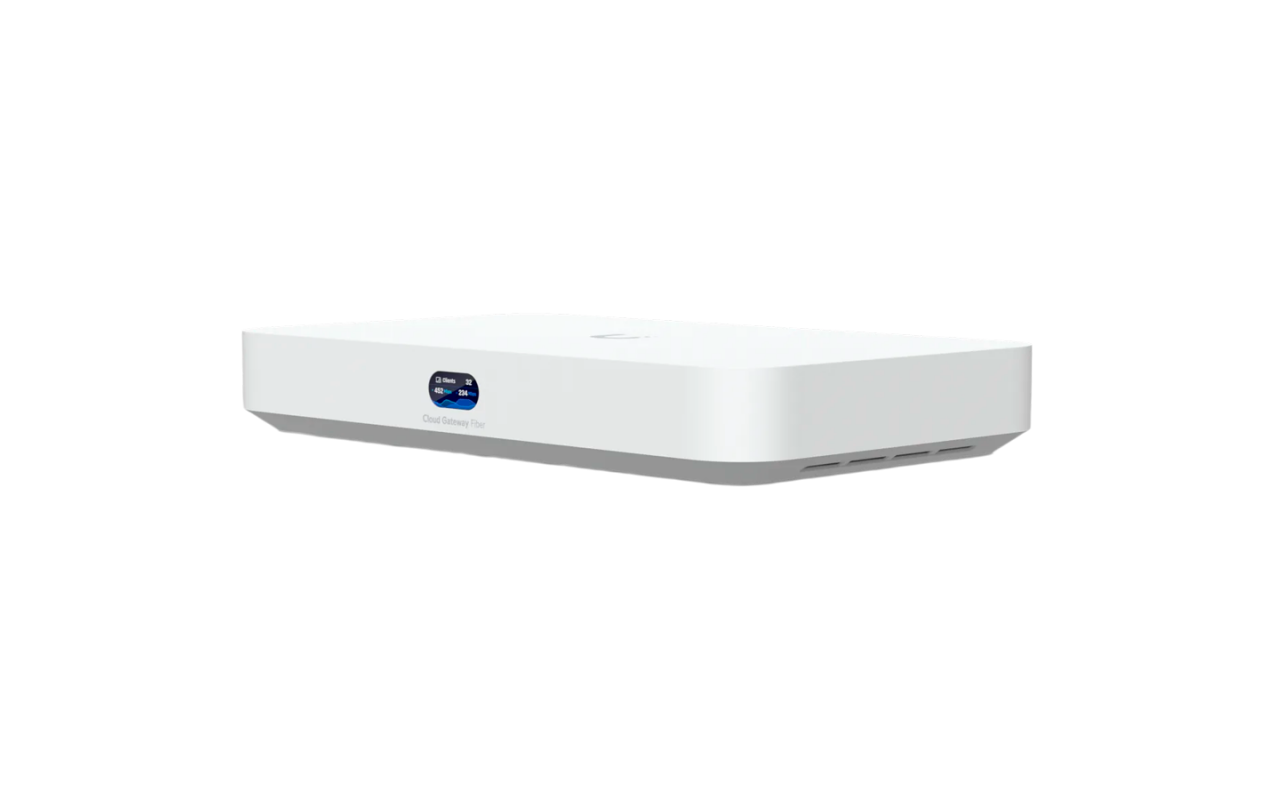 UniFi Gateway

 UniFi Gateway
When you connect offices on opposite sides of the planet, you'd expect the internet to find a sensible route between them. It doesn't. We discovered that our data between Romania and New Zealand was traveling through London, then crossing the entire United States coast-to-coast, and finally crossing the Pacific Ocean. That's like flying from Bucharest to Auckland with layovers in London, Boston, Chicago, Seattle, and Portland.
So we built our own route.
The Problem: Your Data Takes the Scenic Route
We manage three office networks in Romania and one in New Zealand. They were connected using UniFi's built-in SD-WAN feature, which creates encrypted tunnels between sites automatically. Everything worked, files transferred, devices could see each other across continents.
But when we looked under the hood at the actual path our data was taking, we found this:
Why does this happen? The internet doesn't route your data based on geography. It follows business agreements between providers, available capacity, and cost. The backbone provider handling our traffic simply had more capacity on their American network, so our data took a 35,000 km detour instead of a more direct 18,000 km path.
The bigger problem wasn't the latency - 295ms is workable. The problem was that we had zero control. The route could change any day without notice. If a provider decided to reroute traffic, our connection quality could degrade overnight with no way to fix it.
The Solution: Building Our Own Route
Think of it like air travel. Instead of accepting whatever connecting flights an airline gives you (London, then five stops across America), you charter your own path through the cities that actually make geographic sense.
We did exactly that for our network traffic. Using WireGuard (a modern, lightweight VPN protocol), we set up two relay servers at strategic locations:
- Relay 1 in Germany - close to Romania, connected to a high-quality cloud backbone. Our data gets from Romania to Germany in just 29ms.
- Relay 2 in Singapore - the natural geographic hub between Europe and Oceania. From Germany, data reaches Singapore in 158ms. From Singapore, it's a direct submarine cable hop through Perth and Sydney to New Zealand in 123ms.
There's a crucial advantage here that isn't obvious at first: the connection between Germany and Singapore doesn't travel over the regular internet. It runs over the cloud provider's private backbone - dedicated fiber optic cables that only carry their traffic. Think of it as the difference between driving on a public highway shared with millions of other cars, versus having your own private lane. There's no congestion, no interference from other people's traffic, and no risk of a random provider somewhere in between deciding to reroute your data. Our tests confirmed this: the Germany-to-Singapore segment showed zero packet loss and zero retransmissions over sustained transfers.
The key design decision: each Romanian site connects independently to the German relay. This means no single point of failure - if one office loses power, the other two still have full connectivity to New Zealand.



Live topology - amber dots show traffic flowing to NZ, green dots show return traffic
Why Singapore Makes Sense
Look at a globe (not a flat map - that distorts distances). Singapore sits roughly halfway between Europe and New Zealand. From there, submarine cables run south through Australia directly to Auckland. It's the natural crossroads.
The old route went: Europe → Atlantic → across all of America → Pacific → New Zealand. Our new route goes: Europe → Germany → Singapore → Australia → New Zealand. It follows the geography instead of fighting it.
The Results
We ran extensive tests after everything was set up. Here's what we measured:
Zero packet loss. Out of 200 consecutive test packets, every single one arrived. That's the kind of reliability you need for business operations.
Jitter of just 1.7ms. Jitter means how much the delay varies from one packet to the next. Low jitter means your connection behaves consistently - no sudden slowdowns or speed-ups. Think of it as the difference between a smooth highway and a road full of potholes.
~150 Mbps throughput. That's more than enough for file transfers, backups, video calls, and database synchronization between continents.
The round-trip time is 320ms - about 15ms more than the old route. But here's the thing: that 15ms difference is completely imperceptible to humans. What you do notice is reliability, and that's where our route wins decisively.
Why a Controlled Route is Better
Imagine two ways to commute to work:
- Option A: A slightly faster route that changes every day. Sometimes you go through the highway, sometimes through side streets, sometimes through a completely different city. You never know which way you'll go or how long it will take.
- Option B: A route that takes 15 seconds longer, but it's always the same road, always the same speed, and you can predict exactly when you'll arrive.
Most people would choose Option B. That's exactly what we built for our network.
With the old setup, internet backbone providers decided how our traffic traveled. They could change the route any day based on their own business decisions - renegotiated contracts, congestion, maintenance. We'd have no warning and no way to fix it.
With our relay chain, the route is always the same: Romania → Germany → Singapore → New Zealand. Every packet, every time. If something goes wrong, we know exactly where to look and we can fix it ourselves.
What We Gained
- Predictability - the same route, the same performance, every day. No surprises from backbone providers changing paths.
- Independence - each Romanian office has its own separate tunnel. If one office has an internet outage, the other two still work perfectly.
- Security - all traffic is encrypted end-to-end with WireGuard. The relay servers forward encrypted packets without being able to read them.
- Self-healing - all six nodes automatically restore their tunnels after a reboot or power failure. No manual intervention needed.
- Full network access - devices in Romania and New Zealand can communicate directly, as if they were in the same building. Printers, file servers, cameras - everything is accessible across 18,000 km.
The Bottom Line
We traded 15ms of latency for something far more valuable: control. Our connection between Romania and New Zealand is now stable, predictable, encrypted, and fully under our management. When you run business operations across continents, that peace of mind is worth more than a few milliseconds.
The internet is a remarkable thing, but it wasn't designed to give you the best route - just a route. Sometimes, the best approach is to build your own.
Need help connecting remote offices across continents? Get in touch - this is exactly what we do.